
One of the most severe and disturbing pains many people experience in their lifetime is wisdom tooth extraction pain.
It often begins suddenly, interferes with eating and speaking, and in some cases even affects sleep and daily routine. Patients frequently describe this pain as unbearable, radiating to the ear, head, and throat.
Understanding why this happens, when extraction becomes necessary, and how the procedure is performed can help reduce fear and improve decision-making.
What Are Wisdom Teeth?
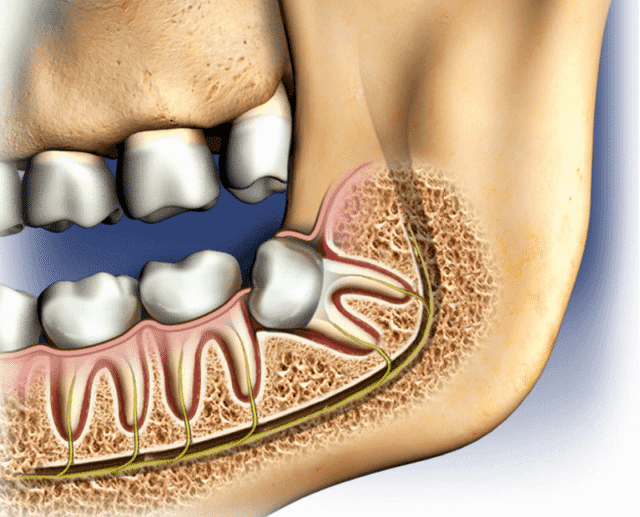
Wisdom teeth are the last set of molars that erupt in the mouth, usually between the ages of 17 and 25. These are the third molars and typically complete the set of 32 teeth in the human dentition.
In earlier human history, wisdom teeth had an important role. Hundreds of years ago, humans had a larger jaw structure and a tougher diet consisting of raw plants, hard roots, and uncooked meat. The additional molars were essential for grinding and chewing.
However, as human evolution progressed, dietary habits changed. Food became softer due to cooking and processing. At the same time, the overall size of the human jaw gradually reduced. Despite this change, the number of teeth remained the same.
This mismatch between jaw size and tooth number is the main reason why wisdom teeth often do not have sufficient space to erupt properly.
Why Do Wisdom Teeth Cause So Much Pain?
Because of limited space, wisdom teeth often erupt in abnormal directions. This condition is called impaction. The tooth may grow sideways, forward, backward, or remain partially trapped inside the bone and gum.
When a wisdom tooth erupts in the wrong angulation, several problems can occur:
• Pressure on neighboring teeth
• Swelling and inflammation of the gums
• Infection around the partially erupted tooth
• Difficulty in cleaning the area
• Bad breath and food impaction
• Cheek biting due to abnormal position
• Pain radiating to the jaw, ear, or head
Sometimes patients feel continuous irritation because the tooth keeps biting the cheek. In other cases, infection develops around the tooth, leading to swelling, fever, and difficulty in opening the mouth. This is why, in many situations, extraction becomes necessary.
When Is Wisdom Tooth Extraction Required?
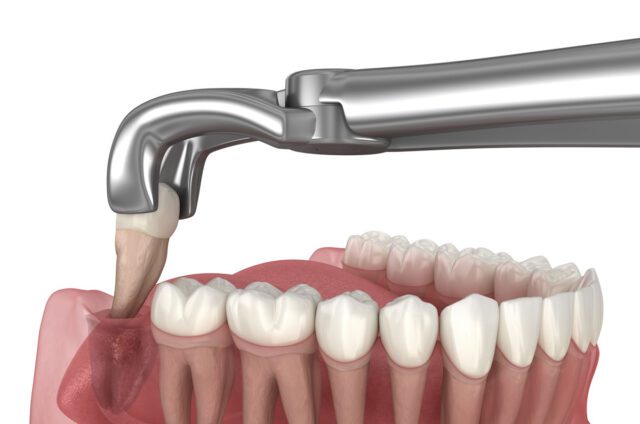
Not every wisdom tooth needs removal. However, extraction is recommended in the following situations:
1. Recurrent pain and infection
2. Swelling and pus discharge
3. Food lodgment and gum inflammation
4. Damage to the adjacent second molar
5. Formation of cyst or tumor
6. Orthodontic treatment planning
7. Persistent cheek biting
8. Difficulty in mouth opening
9. Risk of future complications
Early removal often prevents severe infection and damage to surrounding structures.
Types of Wisdom Tooth Extraction
Wisdom tooth extraction can broadly be divided into two main categories:
1. Normal (Simple) Extraction
This type of extraction is performed when the tooth is fully erupted but positioned incorrectly, or is causing problems. In such cases:
• Local anesthesia is administered to numb the area.
• Dental elevators are used to loosen the tooth.
• Forceps are used to remove the tooth.
Sometimes, even a simple extraction can become surgical if the crown breaks or the roots are difficult to remove. However, this method is usually quicker and less complicated.
2. Surgical Extraction
Most wisdom teeth are impacted and require a minor surgical procedure. The word “surgical” often causes fear, but it does not mean a major operation. It simply refers to a small and controlled procedure performed inside the mouth.
In surgical extraction:
• Local anesthesia is given.
• A small flap is raised in the gum.
• Bone around the tooth is gently removed.
• The tooth may be sectioned into parts.
• The fragments are removed carefully.
• The flap is repositioned and sutured.
This procedure allows safe and precise removal of the impacted tooth with minimal trauma.
Local Anesthesia vs General Anesthesia For Wisdom Tooth Extraction

There are two main ways to perform wisdom tooth extraction:
Local Anesthesia
This is the most common and cost-effective method.
• The patient remains conscious.
• The area is completely numb.
• The procedure is done in the dental clinic.
• It usually takes around 30 minutes to 1 hour.
• Recovery is faster.
• No need for hospital admission.
Because there is no operating theater or anesthetist involved, the cost is significantly lower.
General Anesthesia
This method is used in special cases such as:
• Extremely anxious patients
• Multiple impacted teeth
• Complex surgical cases
• Patients with medical conditions
In this method:
• The patient is unconscious.
• The procedure is performed in an operating room.
• An anesthetist and full monitoring are required.
• All four wisdom teeth can be removed in one session.
• The cost is higher due to hospital and anesthesia charges.
Although convenient, this option is not required in most cases.
Importance of OPG X-Ray Before Extraction
A very important step before wisdom tooth extraction is radiographic evaluation. An OPG (Orthopantomogram) X-ray provides a complete view of:
• Position and angulation of the tooth
• Root structure
• Bone level
• Proximity to important nerves
• Relationship with sinuses
This is especially critical in lower wisdom teeth. A major nerve runs close to the roots. If the extraction is not planned properly, there is a risk of nerve injury.
This may lead to temporary or, in rare cases, permanent numbness of the lower lip, chin, or tongue. Therefore, expert planning and careful surgical technique are essential.
Risks of Improper Extraction
When wisdom tooth extraction is performed by inexperienced hands, complications may occur:
• Nerve damage
• Permanent numbness
• Excessive bleeding
• Infection
• Trauma to surrounding teeth
• Jaw fracture in rare cases
• Dry socket
• Delayed healing
This is why choosing a qualified specialist is extremely important.
Why Choose Aesthetic Dental Studio?
At Aesthetic Dental Studio, we have successfully treated hundreds of wisdom tooth cases, including simple and complex surgical extractions. Our team is experienced in modern surgical techniques and patient-centered care.
We ensure:
• Detailed consultation and diagnosis
• High-quality OPG X-ray evaluation
• Advanced surgical protocols
• Sterile environment
• Comfortable and painless procedures
• Post-operative care and follow-up
Our expertise allows us to plan each case precisely and minimize complications. Patients can always visit us for professional consultation and personalized treatment.
What to Expect After Extraction
After wisdom tooth removal, mild swelling and discomfort are normal. Most patients recover within a few days.
Post-operative instructions include:
• Ice packs for swelling
• Pain medications
• Antibiotics if required
• Soft diet
• Avoid smoking
• Good oral hygiene
• Follow-up visit
Proper care ensures faster healing.
Frequently Asked Questions (FAQs)
1. Is wisdom tooth extraction painful?
No. The procedure is painless because anesthesia completely numbs the area. Mild discomfort may occur afterward, which is manageable with medication.
2. How long does recovery take?
Initial healing occurs in 3 to 5 days, while complete healing takes a few weeks.
3. Can all four wisdom teeth be removed together?
Yes, especially under general anesthesia. Under local anesthesia, this depends on the case.
4. When can I return to work?
Most patients resume routine activities within 1 to 2 days.
5. Is swelling normal?
Yes. Swelling usually peaks within 48 hours and gradually reduces.
6. What happens if I do not remove a problematic wisdom tooth?
It may cause infection, pain, and damage to adjacent teeth.
7. Is the procedure safe?
Yes, when performed by an experienced specialist with proper planning.
8. Why is the cost different in different clinics?
Cost depends on expertise, sterilization, equipment, and complexity. Extremely low charges may compromise safety.
Final Words from Dr. Hasnain, CEO
Wisdom tooth extraction is a delicate and highly specialized procedure. It should always be performed by a qualified dental surgeon. Patients should not attempt to save money by choosing inexperienced practitioners or low-cost setups without proper facilities.
The wisdom tooth area is closely related to important nerves and structures. Improper handling can lead to infection, trauma, prolonged pain, or even permanent numbness.
Always prioritize safety, expertise, and proper diagnosis. At Aesthetic Dental Studio, we believe in delivering high-quality and ethical dental care. If you are experiencing wisdom tooth pain or have been advised to undergo extraction, consult a specialist and make an informed decision.
Your oral health is an investment, not an expense. Book an appointment for the checkup!